
Utah Mediation Guide: Which Type of Mediation Is Right for You
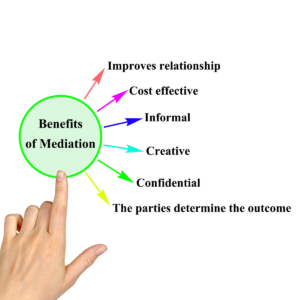 You are in a dispute with a neighbor, a co-parent, a business partner, or a family member. Someone suggested mediation. You looked it up, maybe even scheduled a session — and you went in hoping for something more than just a number to agree on. You may want to be heard by the other party or have them understand your perspective. Maybe you wanted to feel like the relationship, or at least the possibility of one, was not completely gone.
What you may not have known — and what most people aren’t aware of — is that “mediation” isn’t just one thing. There are many fundamentally different approaches to it, with different goals, different methods, and outcomes. The style of mediation you choose matters enormously, and yet most people take whatever is offered without knowing there is another option.
This guide explains the three main models (evaluative, facilitative, and transformative) and offers a framework for choosing the one that fits your situation. This article will pay particular attention to transformative mediation because it is the least common, the least understood, and in some cases the most valuable.
The Landscape of Mediation in Utah
In Utah, mediation is practiced almost exclusively as a transactional process. The goal is settlement — a signed agreement that resolves the immediate legal or financial dispute. The mediator’s job, in this model, is to help the parties reach a number they can both live with and move on. Whether the conflict that produced the dispute is addressed, whether the relationship between the parties survives, whether anyone feels genuinely heard — these are not part of the mandate.
This transactional approach draws primarily on evaluative mediation, with occasional appearances by facilitative mediation sprinkled in. It is efficient, and for purely legal disputes between parties who have no ongoing relationship, it can be entirely appropriate. But for the many disputes that involve people who will continue to share a life — co-parents, neighbors, family members, long-term business partners — it often resolves the case while leaving the conflict intact. Parties may leave with an agreement but without any real change in how they relate to one another.
Utah mediations also commonly use a shuttle format, in which the parties remain in separate rooms and the mediator carries information between them. This is a logistical feature, not a philosophical one — shuttle sessions can be either evaluative or facilitative in style. Transformative mediation, by contrast, works toward something the transactional model does not attempt: bringing the parties into the same room, in direct conversation, with the support they need to work through the conflict together.
The Three Types of Mediation Explained
Evaluative Mediation: The Expert in the Room
Evaluative mediation is the model most closely modeled on litigation. The mediator — often a retired judge or experienced attorney — takes an active role in assessing the merits of each party’s position. They offer opinions about likely court outcomes, point out weaknesses in each side’s case, and apply pressure toward a settlement they believe is realistic and fair. The goal is resolution, defined as a signed agreement.
If this sounds familiar, it should — evaluative mediation bears a strong resemblance to arbitration. In arbitration, a neutral third party hears both sides and renders a binding decision. Evaluative mediation follows the same logic, with one key difference: the mediator’s assessment is not binding. They can tell you what they think a court would do, and they can apply considerable pressure, but they cannot force an outcome. The parties still have to agree. In practice, though, that distinction can feel thin when a forceful mediator is in the room.
This approach works well in purely legal or financial disputes where the parties have no ongoing relationship and simply want a number. It is less well-suited to disputes where feelings, trust, and long-term relationship dynamics are at stake. The mediator’s role is essentially to tell the parties what a reasonable outcome looks like, rather than helping them discover it themselves.
Facilitative Mediation: The Neutral Guide
Facilitative mediation takes a step back from evaluation. The mediator does not offer opinions or predict court outcomes. Instead, they structure a process that helps the parties identify their own interests, communicate more clearly, and generate options for resolution. The mediator asks questions, reflects what they hear, and keeps the conversation productive, but the parties drive the outcome.
This is a significant improvement over the evaluative model for many disputes, because it respects the parties’ autonomy and tends to produce agreements that both sides want to honor. However, facilitative mediation still treats the resolution of the dispute — the agreement — as the primary goal. It may not address the deeper dynamics that caused the conflict in the first place.
Transformative Mediation: Changing the Conflict Itself
Transformative mediation rests on a fundamentally different theory of conflict. Where evaluative and facilitative mediation focus primarily on reaching an agreement, transformative mediation focuses on changing the quality of the conflict interaction itself. The underlying premise is that destructive conflict — the kind that escalates, damages relationships, and leaves people feeling powerless and unheard — arises from a breakdown in two core human capacities: the ability to act with confidence and clarity on one’s own behalf (called “strength”), and the ability to consider and respond to the perspective of another (called “responsiveness”).
When those capacities are restored, something shifts. The conversation changes. People stop talking past each other and start hearing one another. Agreements often follow, but they are a byproduct of a transformed interaction, not the forced endpoint of a managed process.
| A Quick Comparison:
Evaluative — Mediator offers opinions; goal is settlement; expert-driven. Facilitative — Mediator guides the process; goal is agreement; party-driven. Transformative — Mediator supports interaction; goal is changed communication; relationship-driven. |
How Transformative Mediation Works at Christensen & Jensen
 Pre-Mediation Sessions
Our firm’s approach to transformative mediation includes a dimension that most programs do not: structured pre-mediation sessions held before the parties ever meet. These sessions are not simply intake calls or paperwork reviews. They are substantive and educational conversations held individually with each party, in which we introduce the theory and practice of conflict itself.
In pre-mediation, each participant learns how destructive conflict patterns develop, why people say and do things in conflict that they later regret, and what it looks and feels like when a conversation shifts from destructive to constructive. We talk through what to expect in the joint session and how to use the process effectively. By the time the parties come together in the plenary session, they are not walking into the unknown. They are prepared.
Joint Session
This preparation matters enormously. One of the most common barriers to successful joint mediation — particularly in Utah, where shuttle mediation has made many people assume direct dialogue is impossible — is anxiety about being in the same room as the other party. Our pre-mediation work directly addresses the fact that anxiety builds confidence and establishes a shared language for the conversation ahead.
The plenary session itself is a facilitated conversation in which both parties are present. Our mediators follow the transformative model strictly: we do not steer toward outcomes, offer legal opinions, or apply pressure. We listen carefully, reflect on what we hear, and support each person in speaking clearly and hearing fully. The result is often surprising — not just an agreement, but a genuine shift in how the parties relate to each other.
Why the Type of Mediation You Choose Matters
Use the following framework to think through your situation:
- Choose evaluative mediation if your dispute is primarily financial or legal, you have no ongoing relationship with the other party, and you want an experienced neutral to help both sides see what a court would likely decide.
- Choose facilitative mediation if you want more say in the outcome than evaluative mediation allows, and the relationship between you and the other party, while not warm, does not need to be rebuilt.
- Choose transformative mediation if the relationship matters — now or in the future — and you want more than a signed agreement. This includes co-parenting disputes, business partnerships, neighborhood conflicts, workplace disagreements, and family matters where people will continue to interact.
The desire to be genuinely heard — not just settled — points toward transformative mediation.
Speak With a Utah Mediator About Your Options
The mediators at Christensen & Jensen are trained and certified in all styles of mediation. We work with co-parents navigating custody, neighbors in entrenched disputes, business partners at an impasse, and families wrestling with inheritances and old wounds. We believe that most people, when given the right support and preparation, are more capable of working through conflict than they have been led to believe.
If you would like to learn more about our process or simply want to talk about whether mediation might be right for your situation, we invite you to reach out.

