
Utah Football Injuries: When an Injury Calls for an Attorney
 America’s favorite sport is back. Football is a sport where two teams compete to advance a ball into the opponent’s end zone through strategy, athleticism, and physical contact. Played across the nation, it is popular among youth, with millions of young athletes participating each year. Football, however, is physically demanding. Tackles, blocks, collisions, and falls are part of the game, and players generally understand that participation comes with some risk of injury.
But not every injury on a football field is necessarily an unavoidable consequence of the sport. In some circumstances, a player’s conduct, a coach’s decision, inadequate supervision, unsafe playing conditions, or defective equipment may contribute to an injury in a way that raises questions of legal responsibility. In this article, learn when a sports injury may become a legal matter, how assumption of risk affects a potential claim, when negligence or recklessness may create liability, and what injured athletes and their families should do next.
What Does Assumption of Risk Mean in a Utah Football Injury Case?
Assumption of risk is based on the principle that a person who voluntarily participates in an activity and understands its normal risks may find it harder to receive compensation for injuries caused by those risks. In football, players understand that participation generally involves tackling, collisions, and other forms of physical contact. Injuries resulting from these ordinary aspects are likely among the risks a player assumes by choosing to participate.
Assumption of risk, however, is not necessarily a blanket defense to liability. The fact that football is a contact sport does not mean that players, coaches, schools, or other parties involved can disregard reasonable safety precautions. The legal question generally depends on whether the injury resulted from a risk that is inherent in the sport (i.e., a tackle) or from conduct that is outside the ordinary risks a player is expected to encounter.
When Does Assumption of Risk No Longer Protect Against Liability?
Assumption of risk may no longer protect against liability when the conduct or safety failure that caused an injury goes beyond the ordinary risks of football. For example, a player may accept the possibility of hard hits but not an intentional attack unrelated to the play. Similarly, a player may accept the ordinary risk of a concussion but not the added risk created when a coach fails to follow applicable concussion or return-to-play protocols.
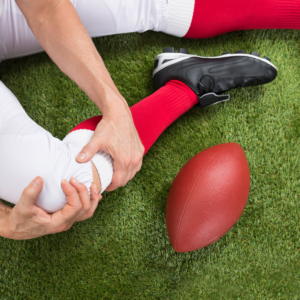 In short, whether conduct falls within the risks assumed by a football player depends heavily on the circumstances. Courts may consider:
- The nature of the activity
- The conduct that caused the injury
- The rules governing the sport
- Whether the injury was foreseeable
- The duties owed by the parties involved
Breaking a football rule does not automatically make someone legally responsible for an injury. Likewise, following the rules does not always prevent liability.
The key point is simple: football players accept many of the sport’s normal physical risks, but they do not accept every unsafe action or failure that causes an injury. Determining whether someone may be legally responsible requires looking closely at what happened before, during, and after the injury.
Can Utah Coaches, Schools, and Athletic Organizations Be Liable for Football Injuries?
A football injury is not always caused solely by actions of another player. Depending on the circumstances and applicable law, other parties such as coaches, schools, and athletic organizations may have legal duties that may put them at risk for liability if not followed. These duties may include:
- Providing reasonable supervision
- Maintaining safe playing conditions
- Properly training athletes and staff
- Responding appropriately when an athlete is injured
These legal responsibilities can vary depending on the level of play and the parties involved. Youth leagues, schools, colleges, private athletic organizations, and facility owners may operate under different rules, policies, contractual agreements, and legal obligations. For these reasons, determining whether these parties may be legally responsible for an injury requires more than simply identifying who was involved.
What Should You Do After a Football Injury in Utah?
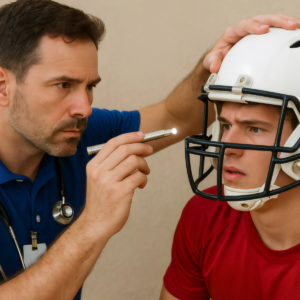 When a football player suffers an injury, the immediate priority should always be the player’s health and safety. Once the player has received appropriate medical attention, however, taking certain steps can help preserve important information about what happened and may be valuable if questions about legal responsibility later arise.
- Seek Medical Attention. Some football injuries may not be immediately apparent, particularly head, neck, back, and internal injuries. Medical records can provide important documentation of the nature and extent of an injury, the treatment received, and the player’s recovery.
- Report the Injury. The injury should be reported to the appropriate coach, athletic trainer, school administrator, league official, or other responsible individual. If the circumstances surrounding the injury are disputed, a contemporaneous report may provide important evidence regarding when, where, and how the injury occurred.
- Preserve Evidence. If possible, players and their families should preserve photographs or video of the incident, the field and surrounding conditions, and any equipment involved. Other potentially relevant evidence may include incident reports, communications with coaches or administrators, team policies, safety protocols, and the names and contact details of witnesses who observed the incident.
- Document What Happened. As soon as possible, write down what happened while the events are still fresh. Include where the injury occurred, what happened immediately before the injury, who was involved, whether any warnings were given, and what happened immediately afterward. It is also helpful to document the injury’s effects over time.
- Consider Consulting an Attorney. A football injury does not automatically mean that someone is legally responsible. However, the fact that football is a contact sport does not necessarily prevent you from having a legal claim. An attorney can evaluate the circumstances surrounding your injury and determine whether the facts support a potential claim or defense.
How Christensen & Jensen Helps with Utah Football Injury Claims
Whether you are an injured player seeking to understand your rights or a player, coach, school, athletic organization, or other party facing a claim, Christensen & Jensen can help assess your case and represent you, so you do not have to navigate the legal gridiron alone. Regardless of which side of a dispute you are on, our attorneys can help you understand your surrounding legal issues and determine the best path forward.
Contact Christensen & Jensen today to schedule a confidential consultation.
You still may have a claim. Liability for sports injuries does not just lie within football. In fact, depending on the nature of the harm, injuries sustained in non-contact sports may present a stronger basis for establishing a legal claim. A waiver or release does not necessarily prevent every potential claim. The enforceability and scope of a waiver depend on factors such as its language, the circumstances under which it was signed, and the applicable state law. Depending on the nature and circumstances of the incident, you are not automatically liable simply because the other player is injured. However, conduct that is negligent, reckless, or intentional – or that falls outside the ordinary risks of the sport – may raise different legal issues. We can help assess your potential liability. The deadline depends on the nature of the claim, who may be responsible, and the law of the state where the injury occurred. Claims involving schools or governmental entities may be subject to additional notice requirements or shorter deadlines. Because missing an applicable deadline can affect your ability to pursue a claim, it is important to consult an attorney promptly after a serious injury.Frequently Asked Questions About Utah Football and Sports Injury Liability
