
 Attorney Gabriell Sabalones was appointed to the board of the Utah Council on Conflict Resolution (UCCR), where she will help lead a new initiative focused on reshaping how the legal community understands and practices conflict resolution.
Her appointment continues Christensen & Jensen’s longstanding involvement with UCCR. Senior shareholder Steve Kelson served as UCCR president for 15 years and also spent many years on the board, while senior shareholder Nate Alder likewise served as a board member for many years.
Sabalones brings a broad conflict-resolution background to the board. Her practice sits at the intersection of litigation and dispute resolution, and she holds dual mediation certifications, including specialized 40-hour training in transformative mediation. She has applied those skills in landlord-tenant mediations, individual conflict coaching, and community dialogue work. She also serves as a conflict-resolution consultant to Mormon Women for Ethical Government, a national nonpartisan nonprofit.
Her academic background includes advanced negotiation training at Harvard, a certificate in conflict narratives from Hebrew University of Jerusalem, and a Bachelor of Arts in International Cultural Studies with emphases in Intercultural Peacebuilding and Communication.
She is now channeling that experience into UCCR’s Transformative Practices Initiative, which she leads alongside Steve Kelson and Carolynn Clark, a UCCR board member and experienced mediation trainer.
A New Initiative for a Changing Field
The Transformative Practices Initiative (TPI) is designed to broaden the legal community’s understanding of mediation — not just as a settlement tool, but as a genuine resource for conflict resolution.
The initiative has three core components:
- Expanded continuing legal education opportunities.
- A centralized digital home for transformative mediation.
- A library of shareable practice materials for new transformative mediators.
Education is at the heart of the initiative. Many attorneys, judges, and law students encounter mediation primarily in its transactional form, where success is measured by whether the parties sign an agreement. The TPI aims to broaden that understanding by introducing legal professionals to a fuller range of mediation styles, especially transformative mediation, which focuses less on pushing parties toward settlement and more on improving the quality of communication between them.
“Transformative mediation is not just for divorce cases,” Sabalones said in a blog post on the subject. “It can be a strong option in any situation involving a former, current, or future relationship — probate disputes, business partnerships, workplace conflicts, neighbor disputes, and more. Wherever there is or will be repeated interaction, transformative mediation may be a better match than evaluative or facilitative approaches.”
The initiative also recognizes that attorneys are often the first — and sometimes the only — conflict resolution resource that the public knows to seek out. By equipping attorneys with a clearer understanding of different mediation models and connecting them with a directory of qualified practitioners, the initiative aims to create a more effective referral ecosystem. Clients who are not well-suited for litigation will have a constructive alternative, and practitioners certified to practice in the transformative model will have increased visibility and access to referrals.
Monthly Brown Bags: CLE Credit and Ongoing Education
In addition to her board role and initiative leadership, Sabalones has been appointed to oversee UCCR’s monthly “brown bag” series — informal lunch sessions that provide continuing legal education credit for lectures on conflict resolution topics. The brown bags are designed to meet legal professionals where they already learn, offering accessible, credit-bearing programming that introduces new perspectives on conflict and its resolution.
The sessions are expected to cover a range of topics relevant to practitioners across different areas of law, from family and probate matters to business and employment disputes. By integrating conflict resolution education into the continuing legal education framework, the initiative lowers the barrier for attorneys who might otherwise never encounter alternatives to the adversarial model.
A Collaborative Vision
The TPI is explicitly designed as a collaborative effort — not a centralized authority, but a community resource. Transformative mediators will be invited to participate, with opportunities to have their profiles listed on the initiative’s digital platform and to contribute to a growing library of practice tools, including agreements to mediate, intake forms, and safety planning resources.
“Transformative mediation skills are presently underutilized in Utah mediations and can greatly assist parties with ongoing relationships” said Steve Kelson. “Whether you are an attorney or mediator, learning Transformative Practice tools assists in communicating with clients, parties, counsel, to address underlying issues and assist in meaningful long-lasting resolution.”
Sabalones’s appointment reflects both the depth of her professional background and the timeliness of the initiative she is helping lead. As Utah’s legal community continues to grapple with rising social conflict and the limits of purely adversarial resolution, efforts to expand and strengthen the state’s conflict-resolution landscape are becoming increasingly urgent.
The TPI is positioned to meet that need—not by replacing what already works, but by building out what has been missing. It also extends work already underway at Christensen & Jensen, which has three certified transformative mediators on its roster, more than any other law firm in Utah. Individuals, businesses, and attorneys interested in learning more about transformative mediation or working with a certified transformative mediator are encouraged to contact Christensen & Jensen to connect with a member of the firm’s dispute resolution team.
 Getting sued can rattle even a well-run business. Most business owners do not deal with lawsuits often. When you receive a summons and complaint, the first instinct often looks like one of three bad options: ignore it, fire off an angry response, or assume the facts will sort themselves out later. None of those moves helps.
 Build a clean starter file with:
 Once a lawsuit is filed, loose talk becomes evidence. That includes:
 A rushed answer can hurt you. Your first filing should protect defenses, preserve options, and fit the actual strategy. Under Utah Rule of Civil Procedure 12(b), certain defenses may be raised by motion before filing an answer, including:
 In Utah, you may be handed an offer letter or contract on day one of a new job with terms you have never had to think about before. Whether you are a new doctor starting residency, a computer engineer in the middle of a hiring process, a salesperson joining a new enterprise, or one of the approximately 7% of workers classified as independent contractors,
 Written employment contracts are common enough, but many workers do not have one, especially in the kind of service jobs that many people work in when they are younger. “Handshake deals” and verbal agreements are much more common. So, as a young professional, you may be encountering a written employment contract for the first time.
 Pay terms may include:
 Many employment contracts contain restrictions on what you may do during and after employment.
 One reason you may be signing a contract for your job is that you are an “independent contractor.” Independent contractors are also sometimes called “1099 contractors,” after the federal tax form that they get from companies that hire them.
 A sexual assault can upend every part of your life. You may feel unsafe on campus, struggle to attend classes, sleep, study, or stay in school. The school may make you feel like you need to carry the harm quietly while everyone else moves on. You may also assume the school’s internal process is your only option. In some cases, it is not.
 To establish a Title IX claim of deliberate indifference to student-on-student sexual harassment, the plaintiff must prove that the school “(1) had actual knowledge of, and (2) was deliberately indifferent to (3) harassment that was so severe, pervasive and objectively offensive that it (4) deprived the victim of access to the educational benefits or opportunities provided by the school.”
  Document Everything
 Get Legal Advice Early
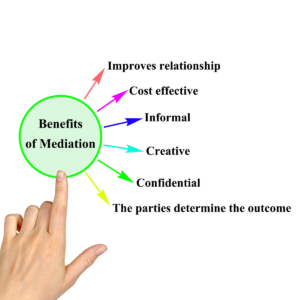 You are in a dispute with a neighbor, a co-parent, a business partner, or a family member. Someone suggested mediation. You looked it up, maybe even scheduled a session — and you went in hoping for something more than just a number to agree on. You may want to be heard by the other party or have them understand your perspective. Maybe you wanted to feel like the relationship, or at least the possibility of one, was not completely gone.
 Pre-Mediation Sessions
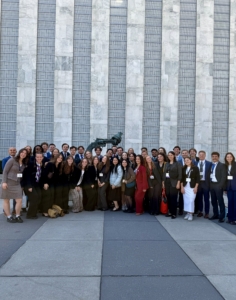 We are proud to recognize
  An Employee Stock Ownership Plan (an “ESOP”) is a way to reward employees with equity in the company they work for while also providing certain advantages to the company, such as tax deductions. Companies can use this as a retirement benefit or to sell a successful, privately owned business from its individual or family owners to its employees. While an ESOP is technically and legally complex to implement, it offers many advantages that can make it well worth it for business owners, including access to credit and unique tax exemptions.
 Tax Deductions for the Company
 “AI is going to reshape every industry and every job,” said Reid Hoffman, Co-founder of LinkedIn.
 So, could a business draft a contract using AI? Certainly. Such a contract could even be legally enforceable. The problem, however, lies with what AI-generated contracts may include—or, just as importantly, what they may overlook.
 AI “Hallucinations” in Legal Content
 Why Trust Matters in the Attorney-Client Relationship
 The Fund operates under a structured process designed to be fair, consistent, and independent. Article 9 states:
 Claimants submit required forms and documentation. The committee reviews the materials, discusses the evidence collectively, and makes a recommendation.

 Detention is rare for first-time offenders but can occur in severe cases involving injury, high BAC, or felony charges.