
Utah Fireworks Restrictions 2026: What Residents Need to Know
 Are Fireworks Banned in Utah for the Fourth of July 2026?
Utah is facing extreme wildfire danger heading into the Fourth of July holiday. With major fires already burning, severe drought conditions across the state, and rapidly changing fireworks rules, residents and property owners should understand where fireworks are restricted and what legal consequences may follow if those restrictions are ignored.
Below is a practical overview of what is currently in effect, where the restrictions apply, and what Utah residents should do before using fireworks or planning holiday activities.
Quick answer: Personal fireworks are restricted statewide through July 5 unless a city or town designates a specific safe area. Stage 2 fire restrictions separately prohibit open fires and pyrotechnics on many public lands across Utah.
What Does Governor Cox’s 2026 Fireworks Executive Order Do?
On June 25, 2026, Governor Spencer J. Cox declared a state of emergency and signed an executive order establishing temporary statewide fireworks restrictions through July 5. The declaration came as Utah faced several overlapping wildfire risks, including record-low winter snowpack, severe or extreme drought across much of the state, critically dry vegetation, and strong winds.
By the time the order was issued, more than 141,000 acres had already burned across Utah. State officials also reported 376 fires are currently burning throughout the state, which at least 273 of were man made.
The executive order temporarily changes how Utah’s fireworks laws are enforced. It gives the State Forester (Jamie Barnes, director of the Utah Division of Forestry, Fire and State Lands) authority to impose a default statewide prohibition on personal fireworks during the July 2–5 window, when fireworks are normally allowed under Utah law.
Crucially, the order does not ban fireworks sales and does not affect permitted professional displays.
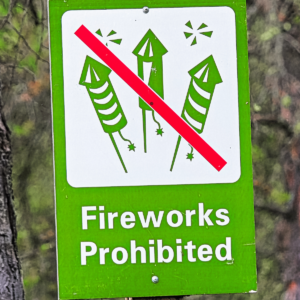 The order does not ban fireworks sales and does not affect permitted professional displays. It also allows mayors, after consulting with local fire officials, to designate specific areas where personal fireworks may still be used safely. If a city does not designate a safe area, the statewide prohibition applies by default.
Governor Cox acknowledged the weight of the decision, noting that he believes existing state law governing fireworks is workable in 99 out of 100 years but that 2026 is the exception. State officials have said they will reassess conditions before the Pioneer Day fireworks window, which runs from July 22–25. If drought and fire danger persist, restrictions may be extended.
What Are Stage 2 Fire Restrictions in Utah?
Stage 2 fire restrictions are separate from the fireworks executive order, but both are designed to reduce wildfire risk. These restrictions apply broadly across many state and federal public lands in Utah, including Bureau of Land Management lands, National Forests, National Park Service lands, and state and private unincorporated lands in many counties.
Under Stage 2 restrictions, the following are prohibited:
- Open fires of any kind, including campfires, charcoal grills, pellet grills, and other ash-producing fuels, even in established fire rings, unless a specific exception applies.
- Smoking, except inside an enclosed vehicle, trailer, or building, at a developed recreation site, or in an area that is paved or completely free of vegetation
- Cutting, welding, or grinding metal in areas with dry vegetation
- Operating motorcycles, chainsaws, ATVs, or other small internal combustion engines without an approved and working spark arrestor
- Fireworks and pyrotechnic devices, including tracer ammunition and exploding targets, on BLM, Forest Service, and state public lands.
- Pressurized gas stoves and grills with a shut-off valve are generally still permitted when used at least three feet from flammable material
Penalties can be significant. Violating Stage 2 restrictions on state lands may result in up to six months in jail and fines of up to $1,000. On federal lands, fines may reach $5,000 and can include imprisonment.
Where Do Utah Fireworks Restrictions Apply: Cities, Counties, and Public Lands?
The executive order and Stage 2 fire restrictions do not apply in the same way. They come from different legal authorities and cover different places.
State and federal public lands: Stage 2 restrictions generally apply to BLM land, National Forests, state parks, and National Parks. Campfires, open flames, and pyrotechnics are prohibited and are enforced by federal and state land management agencies.
Cities and municipalities: The executive order creates a default ban within city limits unless a mayor designates specific safe areas for fireworks after consulting with local fire officials.
Under ordinary state law, cities may restrict fireworks only in certain high-risk “wildland-urban interface” areas or land where development meets undeveloped wilderness. The governor’s emergency declaration temporarily reverses this.
Some towns may also have authority to impose full citywide bans because their entire incorporated area falls within the wildland-urban interface, where development meets undeveloped land. Stockton, in Tooele County, is one example and has banned fireworks for the rest of 2026.
The practical takeaway is simple: check your specific city’s rules before using fireworks. Local restrictions may be stricter than statewide rules.
Which Utah Cities Have Fireworks Bans or Restrictions in 2026?
 Many Utah cities have announced complete bans on personal fireworks within city limits, with no designated safe zones. As of June 26, confirmed citywide bans include:
- Salt Lake City
- South Salt Lake
- Holladay
- Sandy
- Draper
- West Jordan
- South Jordan
- Riverton
- Herriman (ban extended through July 21, with some permitted professional events)
- Bluffdale
- Provo (complete ban except permitted events such as the Stadium of Fire)
- West Valley City
- Midvale
- Moab (under a separate emergency declaration)
- Kearns (unincorporated and subject to the state’s default ban)
Salt Lake County Mayor Jenny Wilson issued a countywide ban covering cities within Utah’s most populous county.
Other cities have adopted partial bans in high-risk areas. Lehi restricts fireworks in foothill areas and along the Dry Creek corridor. St. George prohibits fireworks in designated hazardous terrain, including dry washes, hilltops, and areas near Snow Canyon Parkway. Saratoga Springs, Millcreek, and other communities have also restricted fireworks in foothill areas and near natural terrain.
This list is not exhaustive, and conditions are changing quickly. Residents should verify local rules directly with their city or check the Utah State Fire Marshal’s fireworks restricted areas page.
What Are the Legal Consequences for Starting a Wildfire in Utah?
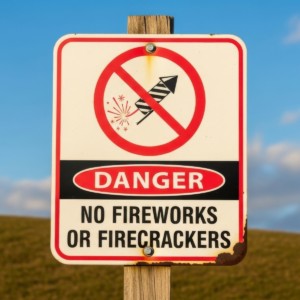 Utah officials have emphasized that people who cause wildfires through illegal fireworks or careless conduct may face criminal charges and financial liability. That liability can include fire suppression costs, which have already exceeded $20 million this season.
The Iron Fire near Eureka shows why compliance matters. Officials believe the fire was ignited by illegal fireworks. It forced the evacuation of an entire city and burned more than 40,000 acres.
Under Utah law, someone who causes wildfire through negligent or unlawful conduct may be held civilly and criminally responsible. Potential liability can include firefighting costs, property damage, and injuries. If a minor causes a fire, parents may also face liability.
What Should Utah Homeowners, Businesses, and Property Managers Do Now?
Whether you are a homeowner, property manager, business owner, or planning a Fourth of July celebration, keep these points in mind:
- Check local rules before buying or lighting fireworks. City designations can change quickly, and purchasing legal fireworks does not mean they can be used legally in your location.
- Avoid fireworks and open flames on public lands. Stage 2 restrictions prohibit open fires and pyrotechnics on BLM, Forest Service, state park, and National Park lands throughout Utah.
- Professional displays are still proceeding at many venues across the state. Attending a community show is the safest and most legally certain way to celebrate.
- The restrictions may extend through Pioneer Day. State officials have indicated they will reassess conditions before the July 22–25 window. If drought conditions persist, restrictions could remain in effect.
Need Help After Fire Damage or a Fireworks-Related Incident in Utah?
If you suffered property damage from a wildfire, believe a neighbor or third party caused a fire near your property, or have questions about potential liability, the attorneys at Christensen & Jensen can help you understand your rights and obligations.

