When the Courtroom Goes Viral
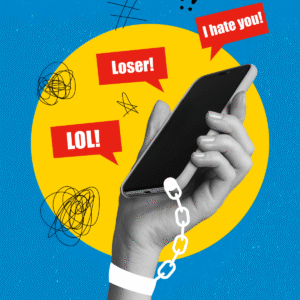 Over the past two decades, digital media has permeated nearly every facet of life, including the courtroom. Once geographically secluded, legal proceedings now unfold inside and outside the courtroom on a global stage through livestreams, TikTok, Reddit, and YouTube.
Public fascination with the justice system is not new. Since the 1960s, when television emerged, broadcasters brought major legal and cultural events, such as the assassinations of MLK Jr. and Malcolm X, into American living rooms.1 Later, media coverage of serial killers like Ted Bundy cemented true crime as a national obsession. In recent years, this interest has evolved into a broader cultural fixation with real-life courtroom drama. As podcasts, docuseries, and livestreamed trials have surged in popularity, civil and criminal trials now draw audiences that extend far beyond the legal community.
This evolution raises critical questions about the shifting relationship between the law and culture. Live-streamed hearings, viral tweet threads, and Reddit forums have expanded access to the legal process, but they have also blurred the boundary between the structured formality of courtroom proceedings and the informal nature of online discourse. Among all areas of civil law, torts have undergone particularly visible transformations. Contrary to what I believed in my first year of law school, torts are not desserts. They are civil wrongs that cause someone to suffer, and they come in many varieties. However, the infiltration of defamation and intentional infliction of emotional distress (IIED) into popular culture is especially compelling.
Defamation in the Age of Algorithms and Influence
The legal contours of defamation, which are traditionally defined as the communication of a false statement that harms another’s reputation, remain rooted in centuries-old jurisprudence. However, the digital age has dramatically reshaped the nature of reputational injury. Harm still arises through lost professional opportunities, but it now manifests in myriad other ways too, like viral memes, mass online ridicule, and algorithmic amplification or distortion. Modern defamation lawsuits now involve questions like:
- How do courts qualify damages when someone loses brand deals but gains millions in followers?
- What happens when the narrative about a person online vastly diverges from the courtroom record?
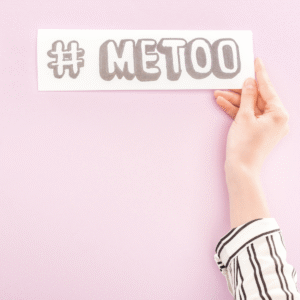 The legal threshold for a successful defamation claim, especially involving public figures, is extraordinarily high. Plaintiffs must prove not only that a false statement harmed their reputation, but also that the speaker acted with “actual malice,” which is a demanding standard that requires proof of knowing falsity or reckless disregard for the truth.2 This far exceeds everyday notions of spite or misinformation. Consequently, many viewers who interpret these cases through a true crime lens overlook the complex doctrinal hurdles that separate a salacious allegation from a legally compensable injury. Nevertheless, emotional distress, reputational fallout, and the ethics of storytelling are no longer abstract doctrinal concerns; instead, they now dominate the broader cultural conversation.
Case in Point: Depp v. Heard
Few cases illustrate this shift more vividly than Depp v. Heard. Actor Johnny Depp initiated the defamation suit against his former partner, actress Amber Heard, after she published an op-ed in The Washington Post. What began as a legal dispute over reputational harm quickly evolved into a global cultural event. Although the formal legal issues at stake centered on the boundaries of the First Amendment and the elements of defamation, the trial transformed into a hybrid of celebrity drama, legal analysis, and ideological conflict. Millions watched livestreams and participated in real-time commentary. Ultimately, it provided a real-life demonstration of how digital media influences public opinion, litigation strategy and cultural narratives (particularly those concerning #MeToo and free speech).
The Rise of IIED and the Cultural Weight of Trauma
Intentional Infliction of Emotional Distress (IIED) is another tort gaining traction in public discourse. This cause of action requires proof that the defendant engaged in conduct so extreme and outrageous that it exceeded all bounds of decency, and that conduct caused severe emotional distress. In a culture increasingly attuned to psychological harm and personal trauma, this tort has taken on new resonance.
Another Case in Point: The Tinder Swindler
In the documentary called The Tinder Swindler, filmmakers recount the stories of women who were unknowingly emotionally and financially manipulated. Although the conduct depicted does not always rise to criminal fraud, it sparked widespread debate over whether civil remedies like IIED might apply. These cultural narratives heighten awareness of emotional injury, but they also risk distorting public expectations of the law. IIED does not apply to mere offense or embarrassment; it requires truly outrageous behavior and emotional distress of a medically significant nature.3 As public conversations about trauma evolve, courts and legislatures must balance cultural awareness against the need to preserve doctrinal integrity.
From Law School to Livestream: Evolving Legal Education and Practice
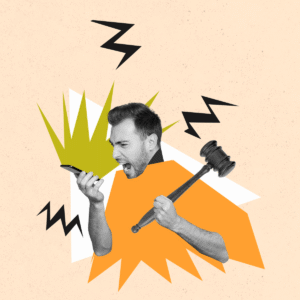 The dramatization of legal issues is not new. Films like The Social Network and Legally Blonde turned civil wrongs into entertainment long before a TikTok algorithm took over. But today’s audiences engage with the law in fundamentally different ways, perhaps because viewers are no longer passive observers. TikTok users break down courtroom exchanges; Reddit posters dissect legal findings line by line; YouTube creators monetize legal commentary for their subscribers. The law is no longer simply watched; rather, it is analyzed, reinterpreted, and performed in real time.
This convergence of law and culture raises pressing questions for the legal community:
- What does it mean to represent a client whose legal claims are litigated simultaneously in court and on social media?
These questions have no simple answers, but they underscore the evolving role of the lawyer, who is not merely a legal advisor, but also a public communicator and an educator. In fact, a lawyer must now navigate both the formal demands of legal procedure and the informal forces of digital media, including hashtags, headlines, and the unrelenting tide of online opinion, to zealously represent their client.
Lawyers as Educators in the Digital Age
Legal education must keep pace with the digital era. Torts courses should expand beyond traditional doctrines to address emerging harms, such as cyber harassment and reputational algorithmic suppression. Doctrinal clarity remains essential, but educators must pair it with a deeper understanding of how tort law functions within broader cultural and technological ecosystems.
The viral life of torts presents a unique opportunity: legal education can now reach the public in real time. When terms like “actual malice” or “outrageous conduct” trend on Twitter, they create teachable moments. Legal scholars and practitioners can step into those moments by:
In this way, cultural engagement does not trivialize the law. Instead, it reinforces legal literacy and expands public understanding of foundational legal concepts. can serve as a powerful tool for legal literacy rather than trivialization of the law.
Conclusion: Law, Culture, and the Future of Torts
Tort law no longer confines itself to classrooms or courtrooms. It now lives in comment sections, podcasts, and digital storytelling. Celebrity trials and streaming documentaries have turned torts into cultural touchstones by shaping and being shaped by the stories that surround them. For law students and practicing lawyers alike, this cultural entanglement is essential to the modern practice of law.
More broadly, the shifting terrain of tort law offers a revealing lens into how society defines harm, assigns blame, and seeks justice. If the current era teaches us anything, it’s that the law does not, and should not, stand immune from cultural currents. As torts go viral, they challenge us examine how legal norms operate in a world saturated with stories, symbols, and screens.
But this responsibility doesn’t rest on lawyers alone. The public, too, plays a role in shaping a more informed legal culture. So, keep asking questions, keep reading, and stay engaged, whether it’s by following emerging cases, exploring legal commentary, or diving into resources like these blogs featured on Christensen & Jensen. After all, an informed public is not just a passive audience to the law; it’s an active participant in shaping the future of justice.
Citations:
[1] Alex McDonald. An American Obsession: The Evolving Genre of True Crime (Nov. 18, 2022) The Politic.
[2] The United States Supreme Court has held that the First Amendment requires the standard of fault to be actual malice for claims involving public officials, see New York Times Co. v. Sullivan, 376 U.S. 254 (1964), and public figures, see Curtis Publ’g Co. v. Butts, 389 U.S. 889 (1967).
[3] Samms v. Eccles, 11 Utah 2d 289, 358 P.2d 344 (1961); White v. Blackburn, 787 P.2d 1315 (Utah Ct. App. 1990); Nelson v. Target Corporation, 334 P.3d 1010 (Utah App. 2014); Anderson Development Company v. Tobias, et al, 116 P.3d 323 (Utah 2005)




 Firework displays, apple pie, baseball, and blue jeans are all iconic parts of the American experience. While Utahns celebrate holidays with fireworks, it is essential to understand the types of fireworks that are legal, the regulations surrounding their use, and the responsibilities in case of an incident. In this article, we break down Utah’s fireworks laws, so you can enjoy them safely while understanding your rights and responsibilities.
 Illegal fireworks fall under five main categories:
 There are some high-risk fire zone areas where fireworks are banned year-round (including holidays). Cities publish maps of restricted areas, so always check your local fire department’s restrictions before using fireworks.
 Liability depends on the facts, but Utah law generally holds the following parties accountable:
 Nathan Alder: Leading Utah Mediator and Trusted Problem-Solver
 Why This Recognition Matters for Clients and Legal Professionals
 Immersed in Education, Not Tourism
 Strategic Collaboration Among Colleagues
 Ongoing Engagement Through ABA Committees
 Christensen & Jensen is excited to welcome back Anna Christiansen, an experienced attorney specializing in civil litigation, civil rights, insurance defense, and personal injury.
 Salt Lake City, UT – February 3, 2025 – Christensen & Jensen Law Firm is proud to announce that, as of January 1, 2025, Kevin Tanner, Zachary Myers, Matthew Strout, and Lucas Adams have been named shareholders. Their hard work, legal expertise, and dedication to clients have earned them this leadership role, strengthening the firm’s future.